
Handling Essential Conversations by How Leaders Respond

Negative facial emotions expression. Young blonde expressive angry furious nervous woman. Emotional girl full of anger and bad feelings at work.

It’s the stuff comedy legend is made of. During a movie or television program, a situation presents itself and then a character in the show classically overreacts. They might rant or rave. Or cry. or wave their arms. More often than not they make something bad even worse by their action or reaction. It makes for great comedy but not great relationships. Certainly not great leadership. Instead of reacting, we find success when leaders respond.

Reacting doesn’t make for good relationships. And certainly not for good leadership.

Why We React

Marshall Goldsmith calls them Triggers. In his book by the same name, he describes them as any stimulus that reshapes our thoughts and actions. So some triggers can be good. If we program in our minds a trigger than stimulates the desired behavior then we can build a positive habit. Where things go wrong are the triggers that are automatic. That’s where we tend to react. Some of the things that can cause automatic triggers are

Our Emotions

Negative triggers tend to set off negative emotions. Those negative emotions, left unchecked, will set off reactions.

Let’s say, for example, that an employee comes to you with a problem. There is a major problem with a phase of your pet project. The employee says, “I don’t see any way we can proceed. I think we are just going to have to cut our losses!” What?! This was YOUR BABY!

What happens? Your face screws up and turns red. Arms and body assume an aggressive stance. The words come. “What is wrong with you people! Can’t you do anything right! You’re incompetent!”

The result is we cause a reaction in the other person. They get defensive or aggressive. Communication shuts down. Nothing gets solved.

The unconscious mind is in control

Have you ever talked with someone or watched someone who tends to let everything come out of their mouths? I refer to it as “stream of consciousness speech“. It hits the mind and it comes out the mouth. There’s no governor there. No filters. Whatever occurs to them just gets blurted out.

This occurs because left to its own, our subconscious mind has no limitations. Societal norms. Consequences. Considering the feelings of others. None of that exists there. It’s all about me. So the things we would really like to say and do in our perfect world can just come out when the unconscious mind is in control.

Mindset

Indoor portrait of funny bald european man making crazy face while standing over gray background. Actor performes on stage in play for children. Guy acts weird to avoid conversation with policeAccording to psychologists, a mindset is a belief that affects how we think about something. That belief drives the way we handle particular situations related to that something.

If we believe that all of our employees are inherently lazy and will slack off given the first opportunity, how will that affect our interactions with them? Especially if we see one of them stop to rest even for a moment?

Having a negative mindset about a subject will cause us to react instead of respond. Just having the mindset itself wells up negative emotions. Add another trigger and things explode. 

Overwhelm

While we actually have a huge capacity for information and stimuli, that capacity is affected by flow rate. What I mean by that is how fast and how much information and stimuli come at us impacts capacity. Too much too fast doesn’t allow our mind to make room for more. 

Think of it like making a water balloon. You attach the balloon to the faucet and then turn on the water. If you turn on the water to full immediately the balloon will fill fast and likely blow up from the overwhelming volume of water. On the other hand, if you control the flow of water you allow time for the balloon to expand and not explode.

Sense of Entitlement

This one doesn’t require a lot of explanation, does it? I am sure we have all encountered people who feel they are entitled to something. Especially if you have teenagers living in your home. And when we feel entitled, as if it is inherently ours, we feel the unfairness and injustice of it all when we don’t get it. The feelings of unfairness and injustice trigger emotions that cause us to react instead of respond. 

How to Change from Reaction to Response

When leaders respond instead of reacting, it’s a game changer. By choosing to respond, you permit yourself to take potentially negative outcomes and turn them into positive results. It impacts you and it impacts the people to whom to respond. You put yourself back in control – of both the situation and yourself.

Reactions create chaos. Responses create results!
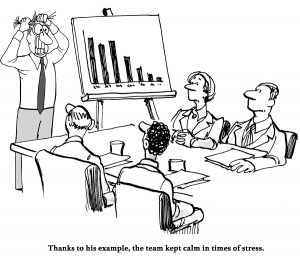
Business cartoon showing a leader pulling his hair out in response to declining sales as the team tries to remain calm.As dire as the consequences are when we allow ourselves to react, choosing to respond can go 180 degrees in the other direction.

Outstanding positive results are possible when leaders respond instead of react.

So how do we turn the tables? How do we choose to respond instead of react? Try starting with these simple steps.

Breathe

Always, I mean always, take a breath.

The simple act of taking a breath exerts control over the reaction reflex. It doesn’t have to be a deep breath, although that helps. Just breathe in and breathe out. 

CHECK THE EMOTIONS

After that breath, identify what emotions you are feeling. When a situation triggers emotions, that’s when dangerous reactions can occur. Name the emotions. When we name them, it helps us to control them. It’s okay to have emotions; in fact, it’s unavoidable. However, when negative emotions are in control there is almost never a positive outcome.

Determine your mindset

What preconceived ideas do you have that driving your emotions? Is it true? Does it apply in this particular situation?

It may be similar to something you experienced in the past but is it the same? Usually, something is different. A different circumstance. A whole other person than the one involved before. How do the differences change what we do?

Consider your words

What we say when we respond sets the tone for the rest of the conversation. It affects us and it affects the person(s) on the other end. Consider these two sentences.

“That was the stupidest thing you have ever done!”

“Do you think that was the best choice?”

The first is a reaction that will consequently trigger a reaction in the other person. They will get defensive or hurt. Their reaction will be to fight or flight. Either way, you will not get what you want out of this. The second is a response that is non-threatening and actually has the other person respond instead of react. It leads to a discussion that finds solutions.

Question Everything – the Right Way

As in the example above, asking questions is usually a great way to avoid reacting and to disarm a potentially explosive situation. It has the added benefit of allowing you to gather more facts so that your decision making can be more informed. Let’s look at follow-up questions to the one above.

Why do you think that was the best choice?”

“What do you think you could have done differently?”

“What do you think we should do now? Why?”

If, in fact, the person’s choice was not a good one then both of you will discover it this way. And by using this method you not only are more likely to find a resolution but you will have also helped the other person learn a valuable lesson. Perhaps next time their decision will be better. Certainly, their trust in you will increase.

Leaders don’t react. Leaders respond. Because responding is how leaders are able to get the best out of themselves and others.

How can communication improve your team? RESPOND NOW and schedule a free Discovery Strategy Session to see how I walk alongside you on this journey!
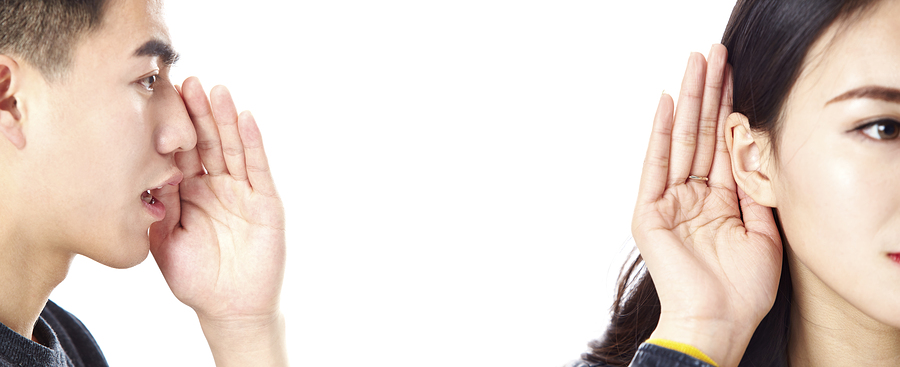

 

Active listening leads to understanding

asian man speaking woman listening isolated on white background. Active Listening

Have you ever been misunderstood? Felt like you were treated unfairly because of what you said? Remember a time where an argument broke out from what you thought was an innocent conversation.

It happens to everyone. And it happens because of a lack of listening. In fact, a failure to practice Active Listening is one of the largest causes of misunderstandings and arguments.

While we can’t control how others react or how well they listen, we can control ourselves. We can do our best to make sure that WE are not the cause of misunderstanding. 

And that’s where the practice of Active Listening comes in. Apply these tips and you will have a good head start to be an Active Listening practitioner.

Open posture

Most of the time, our body obeys our mind. Whether consciously or unconsciously, our body will do what the mind tells it. We walk, we run, we touch, we hold. Mouth moves, sound comes out. All because of impulses from the mind sent to parts of the body.

There are times, however, when the mind will pay attention to the body. Feet pointed towards a door denotes a desire to escape. The mind picks up on that and says, “Hey, we are already late!” Off you go. 

Arms and legs crossed give signals of protecting or shielding. Your mind senses danger, either physical or verbal, and goes into protection mode. It is basic non-verbal communication.

Active Listening Posture

Let’s turn it around. If you face the speaker with arms at your side or resting on a surface, you display openness. The mind picks up on those cues and therefore commands the rest of the body to pay attention. Even more so, the speaker’s mind will likely pick up on that as well. Tone and mood changes when the speaker perceives you are open to what they have to say.

Eye contact is your friend

The eyes, they say, are the window to the soul. That really stands out when you are engaged in conversation. Your eyes tell the speaker that you are anxious to hear what they have to say. Or they tell them you would much rather be anywhere but here.

When listening, your eyes should be open. Look at the speaker. You want to send the message that you are open and relaxed. Smile and your eyes and the rest of your face will follow suit. 

But Not too much

On the other hand, be careful about making too much eye contact. Too much eye contact and you look like you are staring. Use the 70% guideline. Make eye contact with the speaker about 70% of the time. More than that and you look like you are staring. 

Keep in mind, however, that the 70 rule is a general rule. A speaker who is introverted or not very sure of themselves may be actually put off by 70% eye contact. Note how the speaker reacts. If you are making eye contact and they look away, then you should look away too.

Undivided attention

Have you ever tried to have a conversation with someone while they are thumbing away on their smartphone? It’s annoying! You can’t really tell if they are paying attention or not. And if you bring it up, they try to tell you they can do that and listen at the same time. They are a great multitasker!

As we have mentioned before, multi-tasking doesn’t work  . For anyone. If someone you are talking to tries to multi-task, you have a right to ask for their full attention or talk another time. If someone is speaking to you, you owe them the respect of your full, undivided attention. If you are unable to give it at the same, you owe them the privilege of getting it another time.

No Interruptions

Psychologist listening to her patient and writing notes, mental health and counseling. Psychologist consulting and psychological therapy session concept, toned photoEmail stays there until you look at it. Phones have voicemail. Let them be until you are done. Unless you have an urgent family matter pending, there should not be a reason to allow a speaker to be interrupted. 
And YOU shouldn’t be the interruption either. Sometimes you will hear things you feel you need to react to right away. Don’t. What you want is to be able to respond, not react. Almost always when you react instead of respond things do not go well after that.

Don’t react. RESPOND.

And the time to respond is after the speaker has finished, not during. Don’t spend time trying to formulate your response while they are speaking either. You are spending time and space in your mind coming up with your response, which means you aren’t listening anymore. Stephen Coveyonce said, “Most people do not listen with the intent to understand, they listen with the intent to reply.” Is that true of you? Take some more advice from Covey. “Seek first to understand, then be understood.

Affirm the speaker

Feedback is valuable. As John Maxwell says, “Feedback is currency for leaders.” It’s pretty much valuable currency for anyone. When you are engaged in a vital conversation, it’s important there too. While the other person is speaking, they will pause occasionally; sometimes to catch their breath, other times to gather their thoughts. 

This is the perfect time to provide a quick affirmation. You want to let them know you are interested, that you are paying attention, and you want to hear more. You can learn a lot of phrases but the best response is a genuine response based on what they have said so far. “That’s interesting!” or “Tell me more.” or even “Really?!” It can even be as simple as a quick little “uh-huh” or “OK” or “yes“. 

Keep in mind the objective is to encourage the speaker, not stop them in their tracks. Use language that is natural for you and don’t use the same one every time.

Question for clarity

When the speaker completes a thought, take the time to ask a question. Your objective here is seek understanding. So your question should require more than a yes or no response. You also want to take great care not to make your question a challenge or rebuttal. Look to fill in the blanks that may be left by what the speaker has said so far.

Tell them what they said

Once the speaker has finished it is the perfect time to respond. Start by repeating back what they said in your own words. “So what I hear you saying is…” and then repeat it. One of two things will happen. Either they will confirm your understanding or they will correct your understanding. Either way, it’s a win-win. They know that you actually paid attention and you know have a clear picture of what you are responding to. 

Search the Feelings

Words have meaning. Part of that meaning is conveyed through the way that they are said. A study by Psychology Professor Albert Mehrabianonce discovered that WHAT WE SAY accounts for ONLY 7% of communication. The rest is handled by the WAY WE SAY IT and WHAT OTHERS SEE when we are saying it. So to really get meaning, we also have to get feeling. Listen and look for emotional content. A tone of voice, volume, and emphasis. And also

Look for Cues

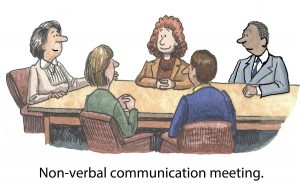
Cartoon of business people who are having a non-verbal communication meeting.Body language also contains a good amount of context and content. Some say it is as large as 68% of meaning. A growing number of people are disagreeing with that. Whatever the number actually is, there is no denying that non-verbal communication is critical to your achieving understanding. Gestures, stance, and facial expressions all convey intent and emotion and meaning. 

The more you pay attention to the whole picture in communication, the more meaning and understanding is gained. Communication actually occurs. That is practicing Active Listening.

Need help building excellent communications within your organization or team. Schedule a free Discovery Strategy Sessionwith me today to see how we can help you.


mASTERING THE lEADERSHIP wALK

Back view of young businessman walking on abstract city background. Success and development concept. Double exposure

Leaders walk. It’s that simple. You cannot possibly lead effectively sitting in one place. You cannot be secluded behind closed doors, huddled behind your desk.
To be sure, there are times where a little uninterrupted office time is necessary. Visioning the future. Planning the day. Determining how to best navigate for your team. Perhaps even a little paperwork has to be done.
However, in the long run, everyone is more effective when leaders walk. The organization. The team. Individual employees. Even the leader himself. 
Yet it’s not just a matter of walking.
  • It’s where you walk.
  • How you walk.
  • Who do you walk with. 
  • What you do while walking.

All of that makes the difference between idle walking and leading.

Leaders Walk Around

Being where your people are is critical. In their flagship book In Search of Excellence, Tom Peters and Robert Waterman popularized the term Management By Wandering Around. By the way, if you haven’t read it yet it should be added to any leaders must-read list, along with Peters latest book, The Excellence Dividend.

The whole concept behind the term is that managers can best lead their people when they are where the people are. They are accessible. They see what is happening. It’s easier to spot problems. More to the point, it’s a very effective way to discover what employees are experiencing. You see what their day is like instead of simply reading a summation on a report. If you want to navigate for your team, you have to not only see the horizon but know where the ship is now.

Numbers don’t tell you that. Your people do. 

Leaders Walk “With Me”

In addition to wandering around, leaders also choose to walk along
You may have the vision of a leader as someone who walks ahead of others. They are looking behind them and urging others to catch up and keep moving. But they are always ahead. After all, if you are leading then you are out in front, right?
However, a leader is most effective when they are walking beside or inviting others to walk along. Shouting instructions or encouragement from further up the road doesn’t make people feel like part of the journey. Often it’s quite the opposite. Instead of getting them to close the distance it actually makes them feel the distance more acutely. They don’t feel a part of things. Instead, they feel like they are being dragged along for the ride. Like a little kid having to go along to Great Aunt Anna’s house where she kisses you on the cheeks and leaves smears of lipstick and smells like licorice. 

Walking Along Not Ahead

Years ago, Stanley Ott wrote a book called The Joy of Discipling. If you are faith-oriented, I recommend it.  Not a long book but definitely a powerful one.

Two office employee walking along office space. Junior employee listening to senior mentor in white shirt and tie. Business meeting and coaching concept

In the book, Ott describes the premise of discipling (teaching or guiding) others is through a “With Me” approach.  Bringing them along with you but also walking along with them; for the journey is not for one person but for both of you.  Along the way, both of your grow.

As a leader, your objective is not to be out front; it’s to be beside others.  It’s not to say, “I have all the answers“; it’s to say “Let’s find the answers together.”  It’s the challenge to bring them along with you on your journey, yet at the same time exploring their journey as well.
That last part is critical because if the relationship only benefits you, the other person is going to lose interest.  A leader brings others along to help the team get where they are going. Yet they also perform the vital work of showing the way to where the person is going. It means you have to care for them. You want to know their story.  Get to know where they have been and want to know where they want to go.  And at all times, being a leader requires having someone with you.  Otherwise, all you are doing is taking a lonely walk.
”If you think you are a leader and there is no one behind (or beside) you, then you are just taking a walk!” -John Maxwell
So the objective is to always have someone with you, even as you learn.  Discovery as a team or group is so much more productive and rewarding.

Who Do Leaders Walk With?

So, does this mean that you spend all your time walking with everyone? Wouldn’t really leave you much time for anything else, would it? Not only that, but not everyone will want to take that walk. You won’t always have a team filled with people with great attitudes, tremendous work ethic, camaraderie, and ambition. Do you walk with slouches as well as the stars?

Choose Your Walking Partners Wisely

Obviously, the answer is no. As a leader, you have great demands on your time. Walking alongside others take energy and time. So you opt to invite people to walk along with you who will benefit the most from it. Some of the signs of good walking partners are:
  • A Teachable Spirit – They need to be willing to learn along the way.
  • Open to Discomfort – Growth happens when we are uncomfortable. You can’t settle in and then learn and grow. It just doesn’t happen. 
  • A Desire to Pass It Along – You aren’t looking to build followers. You are looking to build other leaders.
  • A Passion for Service – If someone is looking to walk alongside you just for their own personal gain they will not be helpful in meeting your goals or team objectives. They have to be willing to be of service as well as open to being served.

Where this all fits in together is in the execution. By wandering around, you are able to discover those people who meet the requirements for a good walking partner. You will find out how they can best serve the team goals and learn about their personal goals. Once you find them, you can then invite them to join you on the journey. 

WHO ARE YOU BRINGING BESIDE YOU? ARE YOU HELPING THEM ON THEIR JOURNEY, OR JUST DRAGGING THEM ALONG ON YOURS?
Who helps you in your walk? I am committed to walk alongside you on your journey and help you achieve success as a leader. Why not schedule a free Discovery Strategy Session today?