Showing Leadership and Practicing Management

Leadership doesn't scream, it speaks.Managers are tough. Managers make the hard decisions. It’s important that a manager be detached and impersonal at all times. They schedule and supervise processes and the human resources allocated to perform tasks. They make the machine work.

That’s what I got from most of the management training I received. Admittedly I put my own little twist on it as I interpreted it but it’s the way it felt.

And it felt wrong. If you have had any management training, perhaps that’s the way it felt to you to.

I then had an opportunity to attend a course on leadership at a large company. Strangely, the title was different but the content was the same.

Leadership is NOT Management

As I studied more about leadership it occurred to me: the biggest challenge we have in creating leaders out of managers is that they don’t know the difference.

[tweetthis]The big challenge creating leaders from managers is few know the difference. #leadership[/tweetthis]

Simple Leadership

Actually the leadership versus management conundrum breaks down into a pretty simple form.  There are a lot of little nuances that go with it but the essence drives most of that. Based on my experiences and my research, here is what I found defines the difference.

♣ Management is About Process

It’s about the systems in place. Procedures matter, the end result matters. Resources matter. People are one of the resources you use to get the job done.

♥ Leadership is About People

A leader focuses on not just the team as a group but on the individuals within in. He knows that for the team to excel individual members have to be able to perform at their best.

♣ Management is Doing Things Right

The rules matter. Gotta have the rules. And you must follow the rules to the letter. They are there for a reason. Implementation is the key.

♥ Leadership is Doing the Right Thing

Values matter. What is best here? If what we are doing is not serving our purpose and taking care of our people, then let’s do something else. Strategy is the key.

[tweetthis]Management is doing things right, leadership is doing the right things. -Peter Drucker[/tweetthis]

♣ Management Directs

The manager is ready to give instructions based on HIS knowledge and experience. “This is what we are going to do and this is how we do it.” The emphasis is on GIT STUFF DONE regardless.

♥ Leadership Guides

The leader provides the vision, the goal, and the expectations. She equips and empowers her people to us their knowledge and experience to accomplish the task at hand.

♣ Management Evaluates

A manager is constantly looking at counting the value of what she is getting. There has to be a number on it. What’s the ROI? How can I measure your actual contribution to our results?

♥ Leadership Adds Value

A leader looks at how he can make things a little better. How do I move our team forward? What can I do to help my employees become a little better today than yesterday?

♣ Management is Bottom Line Focused

What really matters to the manager is a profit was made, or all the goals were met or exceeded. The numbers were made because after all that is what we are all about; nothing else. What have you done for me lately and how has it saved or made me money?

♥ Leadership is Growth Focused

The leader is concerned with more than accomplishment of the task but also where we are going in the future. She thinks about how she can better equip her team to meet the challenges, how she can build them up to accomplish even greater things. She is not just about now but about the future and moving forward to it.

♣ Management Says “Go!”

Quoting from John Maxwell in his book Developing the Leader Within You, “a boss (manager) drives his workers. He depends on authority, utilizes fear if necessary. He fixes the blame.” The manager is content to stand on the sideline watching everything and judging whether it meets his standards.

♥ Leadership Says “Let’s Go!”

Again from John Maxwell, “the leader coaches, he depends on goodwill, he inspires enthusiasm.” The leader rolls up his sleeves and pitches in to help when it is needed and encourage when it is not.

[tweetthis]A manager says “Go” and a leader says “Let’s Go!” -John Maxwell[/tweetthis]

♣ Management is About Control

The manager has to call all the shots. It’s important to her that things are done HER way because it’s the way she learned and therefore must be the right way. Got a better idea? Keep it to yourself. No time, not interested. The problem with control is that it is often an illusion. In the face of outward control and the inability to show initiative, the employee will instead rely on passive-aggressive behaviors and silent sabotage. The sense of control starts to fade, causing panic on the part of the manager who then takes over even more to re-establish their control.

♥ Leadership is About Trust

The leader makes sure that expectations are clear, that people are equipped, and sets his people loose to accomplish their tasks and meet the goals. He depends on his employees to work with the best interest of the organization in mind. To foster that, he works hard to make sure his employees trust him. He builds relationships with each employee, he connects with them. The leader only promises what he can deliver. Consistently he is honest. He shows integrity in both word and deed. The leader knows that mutual trust is essential to team accomplishment.

Some of Both is Good

Now the idea here isn’t to say that management is bad and leadership is good. It’s tempting to do so and many experts today do exactly that. We seem to have moved from the extreme of pure management to the other extreme of pure leadership.

And yet somewhere in between is where the sweet spot is. When the leader gathers the right people in the right place and he equips them with the skillsets and tools they need. When he sets expectations and empowers them to do what is necessary to meet the goal within expected behaviors, then he needs also to have processes in place that at least provide a good starting point for getting things done.

All the leadership in the world doesn’t matter if things aren’t getting better. We still need to get things done and management helps keep that a critical element.

Be the Manager and the Leader

Now there are people who are good managers – they are good at the process – but they are not very good at focusing on their people.  But the best managers not only have to be good with process but they also have to be the good leaders.  They have to be good with their people.  So go beyond the process and focus on the people that your work with.  Focus on connecting with your people and that’s what makes the difference.

The real benefit of being both the leader and the manager is that when you get good at the leadership you find that you spend less time having to manage. Think about the long hours you spend doing “management” things. Think of the frustration. Now think about having more clarity, more peace of mind, more confidence in your team, and more time. That’s the promise of the strong leader.

The Leadership of Theodore Roosevelt
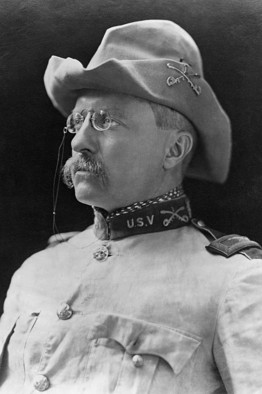
Leadership by Theodore RooseveltThere is story from many years ago that one of the things that made President Theodore Roosevelt so well liked was the fact that he connected with everybody; his valet, the white house servants, everybody.  He knew all of them by name.  Roosevelt knew about their histories and he took the time to talk with them and connect with every one of them.  He spent more time being a leader and less time being a manager. As a result,  all his staff loved him and were willing to work with him and go the extra measure for him.

So develop a genuine interest in and focus on others in your group.  Connect with them, communicate with them, and be consistent and you are going to find that the rest of it is going to fall in place for you.


What’s the greatest challenge you face being both a manager and a leader? If you are a leader but not a manager, how does that challenge you? Share your thoughts in the comments or email me at psimkins@BoldlyLead.com

What is something you can do today to add value to an employee? Not all of them once, just pick one. Find a way to add value to them today and then come tell me about it. If that’s challenging to you, drop me a note and let’s see how I can help you.

Communication Suffers Storm Damage

Break through communication barriersDespite our best efforts, sometimes communication just doesn’t get through.

Calm in the Storm

We had a little storm down here recently called Hurricane Irma. You may have heard of it.

Since our area tends to be full of “transplants” – people who have moved here from other states – for many of them it was their first encounter with a large storm. As you may guess, there was a lot of panic.

To their credit, the Oviedo Mayor, Dominic Persampiere, and the Emergency Operations Chief, Lars White, did an excellent job of using social media and other channels both before and after the storm. Information about shelters, services available, electricity restoration, etc. As I often recommend to leaders, they over-communicated; often the same message multiple times.

Yet still some people kept asking questions about what was already answered multiple times. What gives?

Obviously for some, the communication wasn’t working. It was not really the fault of the communicator in this instance; there were just too many barriers in the way.

Successful Communication

For successful communication, there has to be a meaningful message, an intent sender, and an open receiver. Any one of those three can end up creating a barrier to communication rather than lending itself to success.

Some of the Most Common Barriers to Communication are:

Emotions that Get in the Way

Emotional content is an important part of communicating effectively. Without that, the true meaning of our message is often missed. Where it goes wrong is when the emotions get away from either the sender or receiver. What happened with the storm communication was that the receivers were so full of strong and urgent emotions, it was very hard for the message to get through. It was missed again and again. The sense of the unknown, the panic, the worry, and the fear overwhelmed people. When someone is overwhelmed, it is difficult to send or receive a message successfully. Address the emotions before you address the message.

Undeclared or Unreasonable Expectations

We almost always enter conversations with ideas in our head about what we want to happen or what should happen. Those notions affect our understanding and our responses. We might have the presupposition that the other person will be rude to us because they work for the government and so we enter the conversation expecting rudeness and ready to react to rudeness. We close ourselves off to meaningful conversation because our mind has already given us the answer; we therefore don’t need to hear what the other person has to say. We react to what we expect instead of responding to what we hear. It’s a good practice to set expectations when you begin the conversation rather than allowing the audience to rely on their own.

[tweetthis]Often we react to what we expect instead of responding to what we hear. [/tweetthis]

Using Jargon

This includes using industry slang, abbreviations, acronyms, and words and phrases other people cannot legitimately be expected to know. Let’s throw in using Internet slang and acronyms like LOL, OTOH, IMHO, and so forth. They have their place and it’s not in meaningful conversations or communications. Clear communication requires a shared pool of meaning; in other words everyone has to understand the basics for understanding to occur.

The Absence of Nonverbal Communication

The thing about social media, teleconferences, email, and many of the other ways we communicate today is that we can’t see the other person. If we can’t see the speaker, we can’t rely on gestures, head motions, eyes, mouth movements, and other body language that adds meaning. If we can’t see the audience, we can’t modify our delivery based on how we see people reacting. A UCLA study indicated that 55% of meaning is determined by what people see. So think about that; over half the meaning is lost in a text message or email or social media post. If in person isn’t possible, ask questions to derive feedback and confirm meaning.

Inherent Prejudices

Let’s face it, there will be people where you just don’t like their looks. Hate their politics. Consider their religion to be evil. Have disdain for where they are from. Find the way they talk funny. Or just have something you dislike that you can’t put your finger on. Any of that creates in you a mindset from the beginning of the conversation that closes you off to understanding or to speaking to them in a clear, respectful manner. We all have prejudices, we need the emotional maturity to see past them for communication to occur.

[tweetthis]We all have prejudices, we need the emotional maturity to see past them to communicate.[/tweetthis]

Different Culture

Values and beliefs often come from our ethnic background or simply the environment in which we live. As a native Floridian, my concept of cold is quite different from someone from Wisconsin. So if I say “Gee, it’s real cold out!” I’m thinking it’s below 70 degrees. The person from Wisconsin is thinking around 10 degrees with a 15 degree wind chill factor. When I travelled to Hong Kong to lead workshops, I had to understand the cultural differences and adjust what I say and how I say it to keep the meaning the same.

A Lack of Common Ground

Authentic and meaningful communication occurs when we have connection. Having common ground with someone gives us that connection. Once we have it conversations automatically become more meaningful, immediately require our attention. We are more apt to actually try to reach understanding and perhaps even work past other barriers that get in the way. Common ground should be the starting point for establishing any kind of rapport for communication. Look for ways to establish common ground.

An Uncaring Attitude

Show you care for better communicationIf you don’t care about the people with whom you are communicating it comes out in what you say and how you say it. Your audience will pick up on it sooner or later. Once they feel you don’t care about them, anything else you have to say doesn’t matter. As John Maxwell says, “People don’t care how much you know until they know how much you care!” If you are having trouble caring, truly caring, about your audience pause a moment and determine why. It may mean it’s the wrong audience. It may mean you are communicating for the wrong reasons. It may mean simply it’s not the right time. Stop the communication and re-group.

When have you found it difficult to connect with a speaker? What got in your way? Have you found it difficult to reach a group of people or an individual? How did you handle it?

Share your thoughts here or email me at psimkins@BoldlyLead.com

Subscribe now and you can get my FREE e-book 15 Innovative Ways to Show Employees You Care.

Showing Leadership When It Counts Most

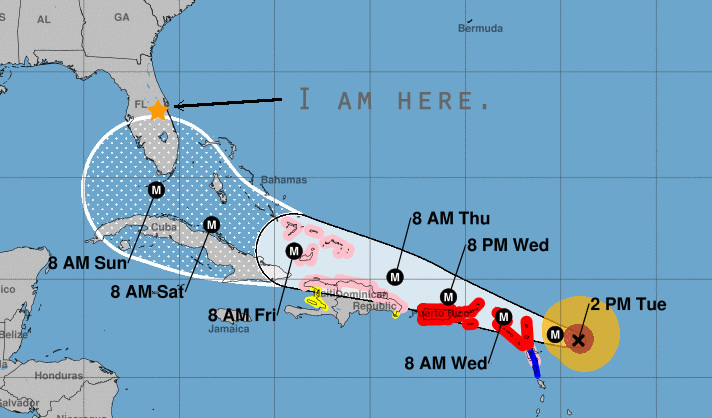
hurricane Irma presents opportunities for leadershipHow we show leadership during a crisis drives how our team responds. As I write this, Hurricane Irma is heading towards the Caribbean with a strong likelihood of then turning to Florida. If it follows predictions (which can change at any moment right now) it will travel up through the “spine” of the state, which includes hitting us here in the Orlando area.

I was born and raised in Florida and have lived through MANY a hurricane. I know what to do, when to do it, and whether or not to worry (never).

Panic is Born without Leadership

What I saw Monday concerned me. I was at the grocery store. I went early because I figured no one would be there being Labor Day and all.

Wrong.

It was packed! People were scrambling to buy durable foods and bottled water. I saw one person actually pick up 10 flats of bottled water! That’s 240 bottles! And this was before we even had a serious threat from the storm. I mean, c’mon, this is NOT the apocalypse!

Who is Leading?

I can’t blame them too much. Many people have moved her from other states and have not experienced a lot of hurricanes. They just saw the effects of Hurricane Harvey. In addition, they have people of Facebook, television, and elsewhere churning the waters with descriptions of devastation that Irma will cause.

It IS a time to take precautions. It is a good time to get ready to secure your property as best as you can, make sure you have food, water, batteries, and board games.

Time to Shine

It is also a prime time for leadership to shine. 

[tweetthis]During the storm is when Leadership should shine. #BoldlyLead[/tweetthis]

Panic should not be the order of the day. When leaders are calm, it has a cascading effect on those around them. It is critical, then, that leaders stay even keeled and constant both before, in the midst of, and after the storm.

  • Leaders show concern without the hype. Know what to do, direct others to get things done. Convey a sense of urgency without being frantic.
  • Leaders take care of others as well as themselves. Make sure your team has opportunity (and means) to secure their property and family.
  • Good leaders reassure. Let everyone know that every step of the way you have their back.
  • Effective leaders make sure that things are in place to pick up the pieces after the storm.
  • Great leaders spread composure and peace in what they do and what they say in these moments.

If you stand to be affected by these storms, what are you doing to be the calm in the storm?

If you aren’t going to be affected, what storms are going around you where you have the opportunity to shine?

Are you experienced with weathering storms? Share some tips here on what you do or write me at psimkins@BoldlyLead.com

Gotta go now. Got some shopping to do!