
Why Employee Happiness May Not Really Be Your Goal

Are you focusing on the wrong thing with employee engagement? It seems that in many cases we are. Do a Google search on employee engagement and see how many other words pop up with it. When I do one of the words that comes up most frequently is happiness. The suggestion is that employee happiness and employee engagement are one and the same.
In fact, overall too much time is spent on employee engagement thinking about employee happiness. On the surface there seems to be good reasons for it.
For example, studies have shown again and again that happy employees are more productive. According to a Warwick Study , happy employees are typically 12 percent more productive than unhappy employees. Many other studies make similar claims that happiness is securely bound to productivity.
 A Wharton Study suggests that employee satisfaction results in two to three percent higher returns for shareholders. Another study suggests five times better stock performance over organizations with lower employee satisfaction. This was primarily based on a study of the 100 Best Places to Work compared to organizations that didn’t make the list.
Still more research indicates that organizations experience 30 percent higher customer referrals when employees are happy.
And of course, there is the matter of employee retention. Tons of articles all touting significant increases in retention when job satisfaction is high.
Here is Where It All Goes Wrong
The issue I have with all of these studies (and many others) is that they try to create correlations that aren’t there. Mostly they try to use other words or concepts to mean the same as engagement.
The Warwick study is the exception. There is absolutely no doubt that happy employees are more productive than unhappy employees. Beyond just that one study, the evidence is overwhelming and indisputable. Higher productivity is affected by employee happiness. What you can do about it is another matter, but we’ll get to that in a minute or two.
Employee satisfaction is not the same as happiness. A person can be satisfied with their work conditions and job responsibilities and yet not be happy. Tying happiness to employee satisfaction greatly limits the scope of happiness.
Many other studies, such as the one reporting 30 percent higher customer referrals, mix engagement and happiness. As evidence of that, what the researchers did was administer an employee engagement survey to their subjects. I have written before about what a waste of timemost employee engagement surveys are. Aside from that, when the researchers wrote their conclusions they didn’t talk about engagement. They talked about happiness. Again, making the assumption that engagement and happiness are the same. They’re not. Not even close.
The result of all this is a muddying of the waters. Instead of focusing on things that really make a difference with our team or organization, we focus on making people happy. We fail dismally as a leader when we try to make everyone happy. It just can’t be done. So stop trying.
Six Secrets About Happiness
Happiness is not engagement
It actually is possible for an employee to be engaged at work and not really be happy. There is no research I could find that legitimately ties happiness to engagement.
Let’s understand exactly what employee engagement is to understand why happiness is not the same thing. Engagement is when an employee at work is functioning with the best interests of the organization in mind. Their attitudes and actions reflect the values and goals of their team or organization.
 Just the specific scope of being happy at work concerns much more than just whether or not a person is engaged. Do they affect each other? Without a doubt. Happy employees are more likely to be engaged. Being engaged makes it easier to be happy. Yet happiness expands beyond the scope of just engagement. Or the workplace for that matter.
Happiness is Not Job Satisfaction
Again, a person can have job satisfaction and not be happy. Job Satisfaction has to do with whether you like what you do. It is affected by the particular tasks and responsibilities you have. Whether or not you are being challenged and utilizing your best skills. Co-workers, environment, managers all factor in there. You can be satisfied with your job and not necessarily be happy.
You Can’t Control Happiness
Even if all of the above was not true it wouldn’t matter. Employee engagement and happiness and job satisfaction are all one and the same. Employee engagement surveys are excellent indicators of employee happiness. So what?
What you can’t get away from is that no matter how much you know about the level of happiness in our employees you simply cannot control it. YOU CANNOT MAKE SOMEONE ELSE HAPPY, despite what all the love poems and sonnets tell you. And that’s not just in the workplace, that’s everywhere. You can no more make someone happy than you can change the past or predict the future.
And the fact that happiness is beyond the workplace is another reason we can’t control it. Whether or not someone is happy is not just determined by work but also by their lives outside of work. Relationships, involvement, circumstances. All things that affect happiness that carries over into the workplace.
Ultimately, we cannot control the happiness of others. And here’s why.
It’s a Personal Decision
Happiness is not determined by outside factors. Happiness is a choice each individual makes.
I have known people who seemed to have everything and yet never quite seemed to be happy. By contrast, I know others who have very little and are always happy it seems. What makes them happy or not is that simply they choose to be happy. It’s cliche but that doesn’t make it any less true.
The Apostle Paul said it best when he said,
“I have learned to be content in whatever circumstance I find myself….I have learned the secret of living in every situation, whether it is with a full stomach or empty, with plenty or little.”
What Paul is saying is that he made a conscious choice to be happy no matter what was happening to him or around him.
Your happiness is entirely up to you. And so is theirs.
It is Not Measureable
Even IF we could control happiness, exactly how would we determine the level of happiness each person feels. Other than asking them I know of no other measurement. Apparently, no one else does either as evidenced by all the research we cited before where happiness is measured by engagement or job satisfaction or productivity. If that is all wrong (and it is) then we have no real measurement of happiness and nor do we want to.
Culture Rules
While we can’t control happiness we can create an environment more conducive to happiness. It’s not so much making them happy as it is removing reasons to be unhappy. It has to do with the culture we create in the workplace.
When you place a high priority on caring and showing employees you care. When a high value is placed on people and that is reflected in the way they are treated. When core values are clear to everyone and reinforced in your own behavior and in the behavior you expect from others.
If you put people in circumstances where their best skills are being used and challenging them to grow. When we value their input and their output. Make it so each person feels like a valuable part of the team, the organization, and it’s goals.
Control what you can control. Create circumstances where employees are able to have higher job satisfaction and become more engaged. Give them reasons to choose to be happy.
 WARNING! DON’T READ THIS WHILE YOU ARE HUNGRY! There are going to be a lot of food references here but they all have a point. It leads to what it can teach us about team success.
 Here’s a cool exercise you can use with your team or with a group of leaders to help them understand inclusion. I learned this with leader training we use for teaching
 Have you ever let a pending decision freeze you? You know a choice has to be made. All of the options have pros and cons associated with them. You feel like EVERYTHING is hinging on this one decision you need to make. What do you do? The decisive leader knows how to make critical decisions and acts in the best interest of the team.
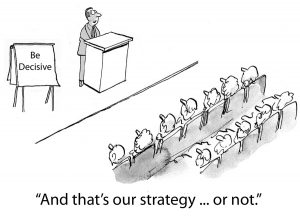 Being a decisive leader doesn’t always mean that you are the only one who can decide. Don’t fall into that trap! It’s what ties even the most decisive person up in knots and can lead to poor decision making.
 Before we talk about counsel keep in mind that every decision does not necessarily need to be made by you alone. The decisive leader knows when a collaborative or delegated decision is better than a command decision.
 Stephen Covey once said, “Most of us don’t listen with the intent to understand, we listen with the intent to reply.” We cannot really fully understand what someone else is trying to say if we don’t let them finish. That requires some patience. With some, you may have to hold on when they pause and wait until they really are done.
  Have you noticed this one doesn’t seem to get a lot of practice out there today? When we don’t agree with the statements of others strongly it is somewhat natural to have an emotional reaction. Unfortunately, when emotions take over we can no longer depend on our hearing for accuracy. We will either hear what we want to hear or what we think they are going to say. As difficult as it is, we need to keep emotions in check if we really want to reach understanding.
 Within almost any group there will be shortcuts in communication. The slang and acronyms are typically known only to those in that circle. Do you know what RCA is? Your interpretation of that acronym would depend on your circle. It could be the company
  One of the benefits of living in Central Florida is all the attractions around here. One of the attractions, of course, is